First Published Tuesday 13 Aug 2024 | Last Updated Thursday 25 June 2026 | 3 min read
Plugged In: bracing our network for Fortnite’s Battle Royale
Written by James Di Trapani, Senior Manager, Network Backbone & IP Edge Engineering and Toby Beshara, Communications Officer

Fortnite is a behemoth of the gaming world, with several mega updates each year drawing huge attention. These updates, ranging from 10GB to over 50GB of downloaded data per user, release at the same time across the globe, posing a mammoth challenge for internet providers with the sheer strain the event places on networks.
In March, Fortnite’s ‘29 Ch5S2’ update presented another challenge for our network engineers. See how we tackled it below.
Into the storm
Update 29 Ch5S2 released at 8pm AEDT on Friday 8 March, with file sizes of 38GB for PC players and 10GB-25GB for console players.
At this point, each of the last 3 Fortnite updates had caused historic peaks in usage across our network. 29 Ch5S2 saw a peak of 3.76 Terabits per second (Tbps), or 3.76 trillion bits per second. To get a sense of scale, these updates broke the previous (non-Fortnite related) record by a huge 32%.
Unsurprisingly, these updates often caused congestion for users across ISPs in Australia. Luckily, our network team has been working to reduce the impact of each update, learning and iterating on our improvements, and we’re seeing some big strides.
Fortifying our network
We found out 29 Ch5S2 was coming a couple weeks beforehand and immediately reached out to our Content Delivery Network (CDN) partners, including Fastly. CDNs like Fastly manage servers that store large files from international services. The key here is that they have servers across Australia (and likely one near you) making it easier and faster for you to use or download those files. Hence the great name Fastly.
In the lead up to the Fortnite drop, we reached out to the awesome folks at Fastly to ensure that traffic from Epic Games flowed to their CDN smoothly, avoiding a bottleneck of data flowing through international links.
Our work paid off. March’s update had minimal traffic from international links, with most of the data coming from domestic CDNs.
While the update came through several CDNs, Fastly absorbed the most traffic, with a 5422% increase. As a result, our connections to Fastly in Queensland, Victoria, and New South Wales reached the Peak Information Rate (PIR).
When this happened, Fastly knew to spread out the traffic to alternate, available pathways to try and mitigate congestion. This was mostly successful – although one backup port reached capacity with 198 Gigabits per second (Gbps) of traffic, mostly coming from Victoria.
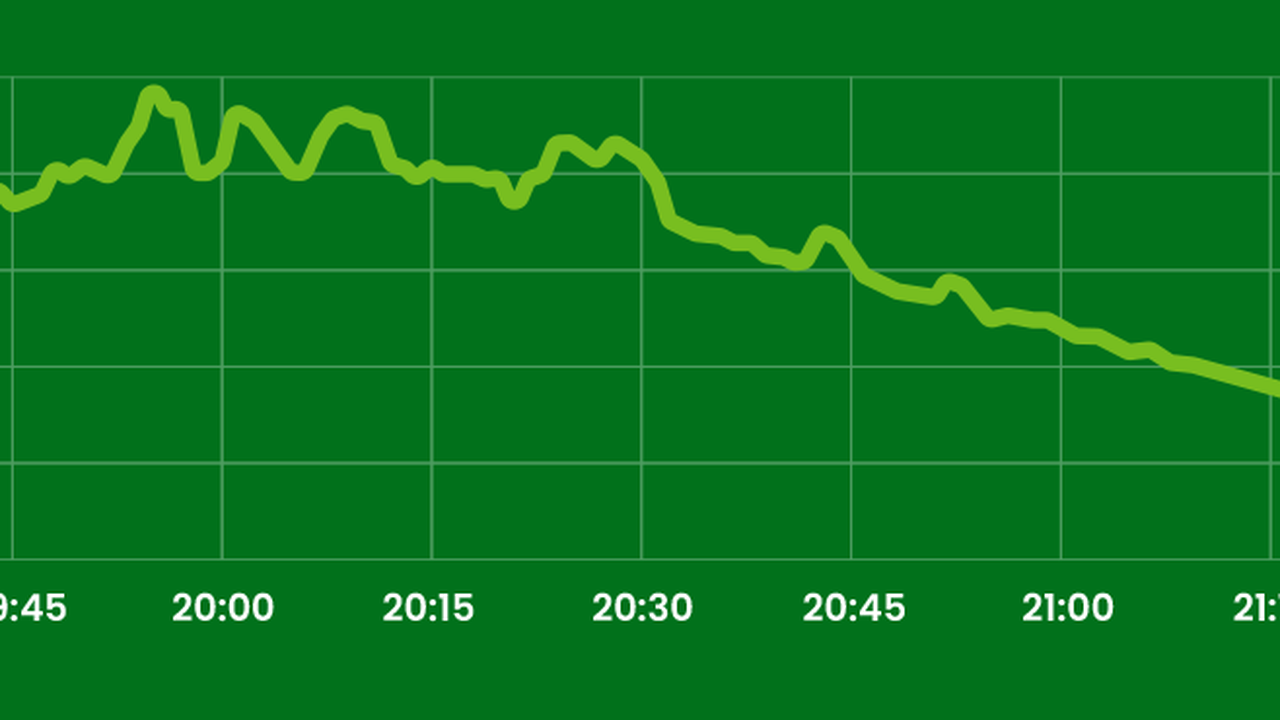
Fig. 1: Traffic on our network sky rocketed when Fortnite's 29 Ch5S2 update was released.
All in all, at least one of our Network-to-Network Interfaces (NNIs) to NBN experienced congestion at 52 of 121 of NBN’s Points of Interconnect (POIs).
Getting up to speed: An NNI is the port that connects our backhaul to a POI.
A POI is the infrastructure that connects the NBN to our network.
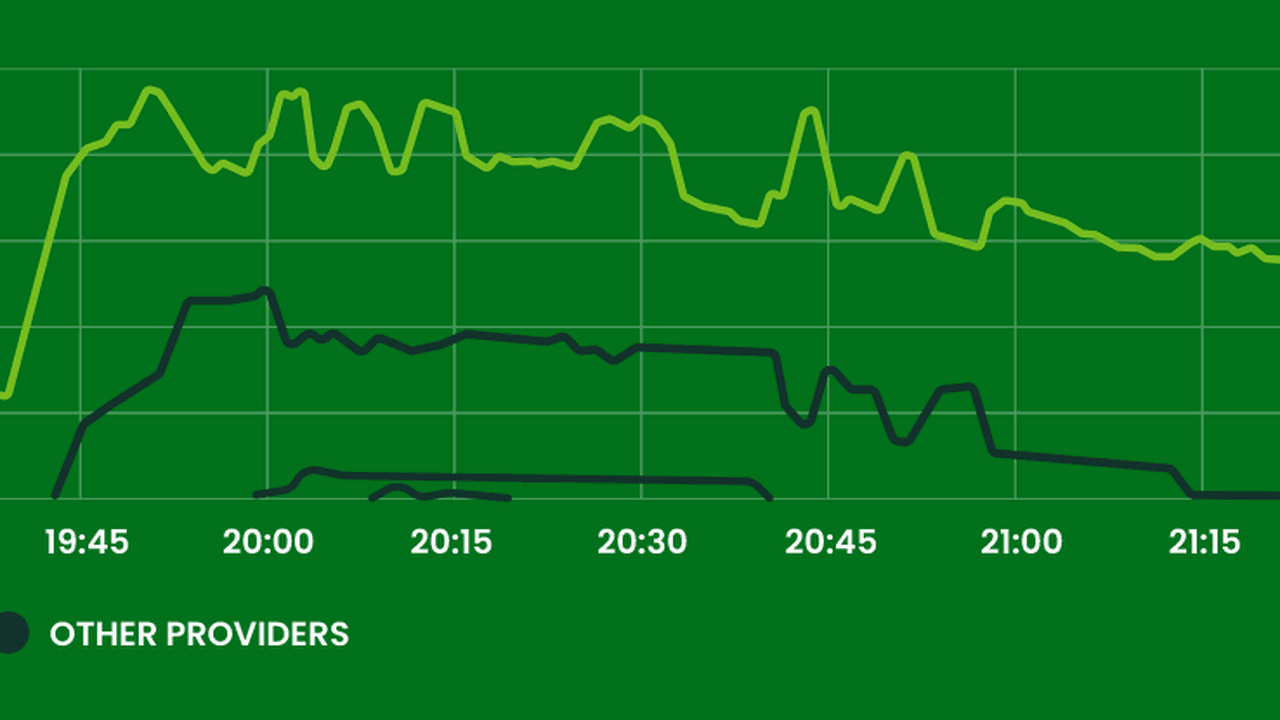
Fig. 2: Traffic being redirected live from the Fastly CDN across different providers/ports
Each update has been an improvement on the last. Unlike previous updates, 29 Ch5S2 didn’t require engineers to reroute traffic internationally or inter-capitally at all. This meant customers were still able to send and receive data from state to state – and download from local servers – with Fortnite traffic causing less congestion on the network.
The final circle
Scaling capacity is a priority as we move into a world where the average household’s download requirements are quickly growing. While this is a challenge, we’re continuing to shore up our network in a few ways.
We’ve worked closely with Fastly to increase our capacity in the connections to their servers, so they can support more traffic before needing to redistribute it.
To prevent future congestion to POIs, we’re in the process of moving to 100 gigabit NNIs.
On top of that, we’ve been upgrading our international transit ports, increasing their capacity so that our network is well positioned to handle future updates and other large data transfer events.
That said, we’re never going to stop upgrading and futureproofing our network, as Australia’s need for fast, reliable internet continues to grow.
If you’d like to keep up with our Networking team, follow us on X @asn4764!
Written by

James Di Trapani
Senior Manager, Network Backbone & IP Edge Engineering
With over six years of industry experience, James is the technical lead responsible for the architecture and engineering of the AS4764/AS9268 Backbone and Internet Edge. His team handles over 3Tbps of ingress traffic to Residential, Enterpr...
See all articlesShare this post with your mates!
Articles like this

OSI layers: Everything you need to know
16 May 2022 | 5 min read
If you’re not heavily into networks and telecommunication systems, then you probably haven’t heard of the seven OSI layers. In fact, if you have heard of it th…
Tags: Network Infrastructure, Wholesale
Read more
Plugged in: Getting our network ready for even higher speeds
16 September 2025 | 2 min read
The barriers to a quality online experience are falling as Australia's internet infrastructure improves, thanks to the widespread adoption of high-speed techno…
Tags: PRO, Network Infrastructure, NBN Speed Upgrade
Read more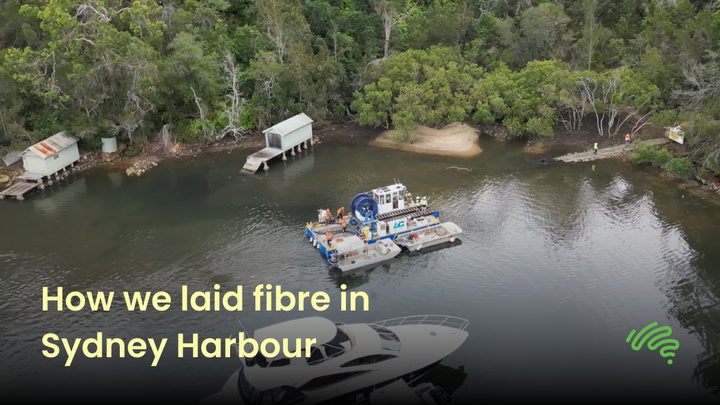
How we laid fibre in Sydney harbour
11 December 2024 | 4 min read
This complex logistical endeavour is made that much harder when you add about 500 gigalitres of water (that’s 500, 000, 000, 000 litres!). Here’s how we ran fi…
Tags: Internet, Network Infrastructure
Read more